How User Research Findings Guide edTech Product Strategy

User experience research, or UXR, is the key to understanding your primary users without losing valuable time or resources—especially as we navigate more risk in the market.
When I work with clients on UXR plans that guide their edTech product strategy, I always want to know:
- How are teachers using your product in their classrooms?
- Which other persona will educators discuss efficacy and product analytics with?
- How does your product support educators’ need to share student progress?
Findings to these initial questions yield the beginnings of product strategy and focus the types of UX improvements you make.
In this article, I’ll walk you through what UXR looks like in edTech, as well as how it can direct product strategy.
Whether you’re building a new edTech product or scaling improvements over time, UXR helps you mitigate risk and shape your team’s design decisions.
What is User Experience Research in edTech?
User experience research is targeted, quantitative and qualitative research about your edTech users.
Remember: in edTech users can range from educators to learners to administrators, or even specialized instructors.
You collect UXR by conducting:
- Interviews
- Surveys
- Prototype testing
- And more with your users
You can also conduct desk research or review product analytics to round out your understanding of how users interact with your learning tools.
User research findings should move you closer to achieving a specific product goal, whether that’s increased engagement or fixing a specific trouble spot.

From User Experience Research to User Stories
With many different edTech personas in play, it’s crucial to understand how your primary persona interacts with or serves other personas.
For example, an educator might interact with everyone from students to administrators to parents in a single day.
“The goal is to create a story, based on real data, about a person authentically using your product,” said Jessica Millstone, former Director of Engagement & UX Researcher for BrainPOP.
“The more specific the better! User personas are hands-down the best way to create a memorable imprint of your customer’s needs that your team can connect with throughout the product design process.”
Sifting through Volume & Noise: How User Research Findings Guide edTech Product Design
If your product team already has a research practice, it’s possible you only have the bandwidth to validate design decisions, rather than conduct deep dives on your user base.
Truth be told, you may already have more user data than you can handle.
Millstone understands this challenge well. “I think people know how important it is to collect real information about user needs,” she said.
“But the rich, qualitative data product developers get from interviewing, surveying, and conducting deep market research on their target audience comes with its own problem: volume and noise.”
By regularly holding strategic discussions about your primary users, you’ll cut down on the “volume and noise” of your user research findings and direct the findings more efficiently.
How Learning Environments Affect edTech Product Design
With highly detailed edTech personas, you can also narrow the focus of your design team.
The more details you uncover about your persona’s working environment, the more those details should affect your product design.
At Backpack Interactive, we call this effect “persona resonance.”
We use this term to characterize the interactions a primary persona makes with other personas as they interact with digital tools.
User research uncovers these interactions and helps us emphasize the right features for the right persona at the right time.
For example, an edTech product that serves pre-K educators will have a different voice and tone than a product designed for high school or higher ed instructors.
In both cases, you’re designing a product meant for educational experts.
But pre-K educators interact regularly with young students, and these educators will expect their learning tools to have a look and feel that’s far different from the digital tools an educator in higher ed will adopt.
Ultimately, “persona resonance,” makes it easier to unlock the nuances of your personas.
That way, you can design a product that’s useful and reassuring and showcase the value of your product to your buyer persona.
5 Ways to Make User Research Findings More Actionable
Because it’s easy for product teams to get bogged down in too much data, or shortcut the research process entirely, I always recommend grounding UXR in actionable next steps.
When you know how you’ll use your findings—whether good or bad—it’s easier to make a UXR plan that will benefit your entire team.
1. Make a plan for the outcome of your UXR
Identify how UXR will help your team be more precise and tactical.
This way, you won’t get distracted or go down a research rabbit hole.
My team always starts with a rubric that allows us to test the actionability of our UXR.
2. Conduct a UX audit of your existing product
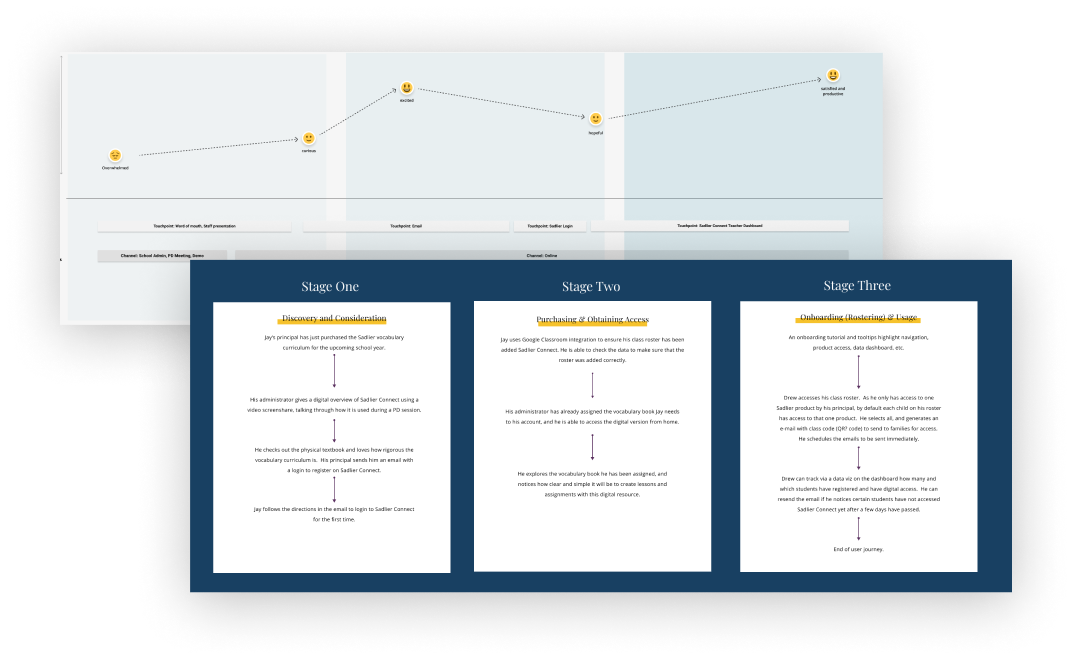
If you’re redesigning a learning tool, start by analyzing user data, site maps, and user journeys.
Dissect the product’s UX to create a road map for your next steps.
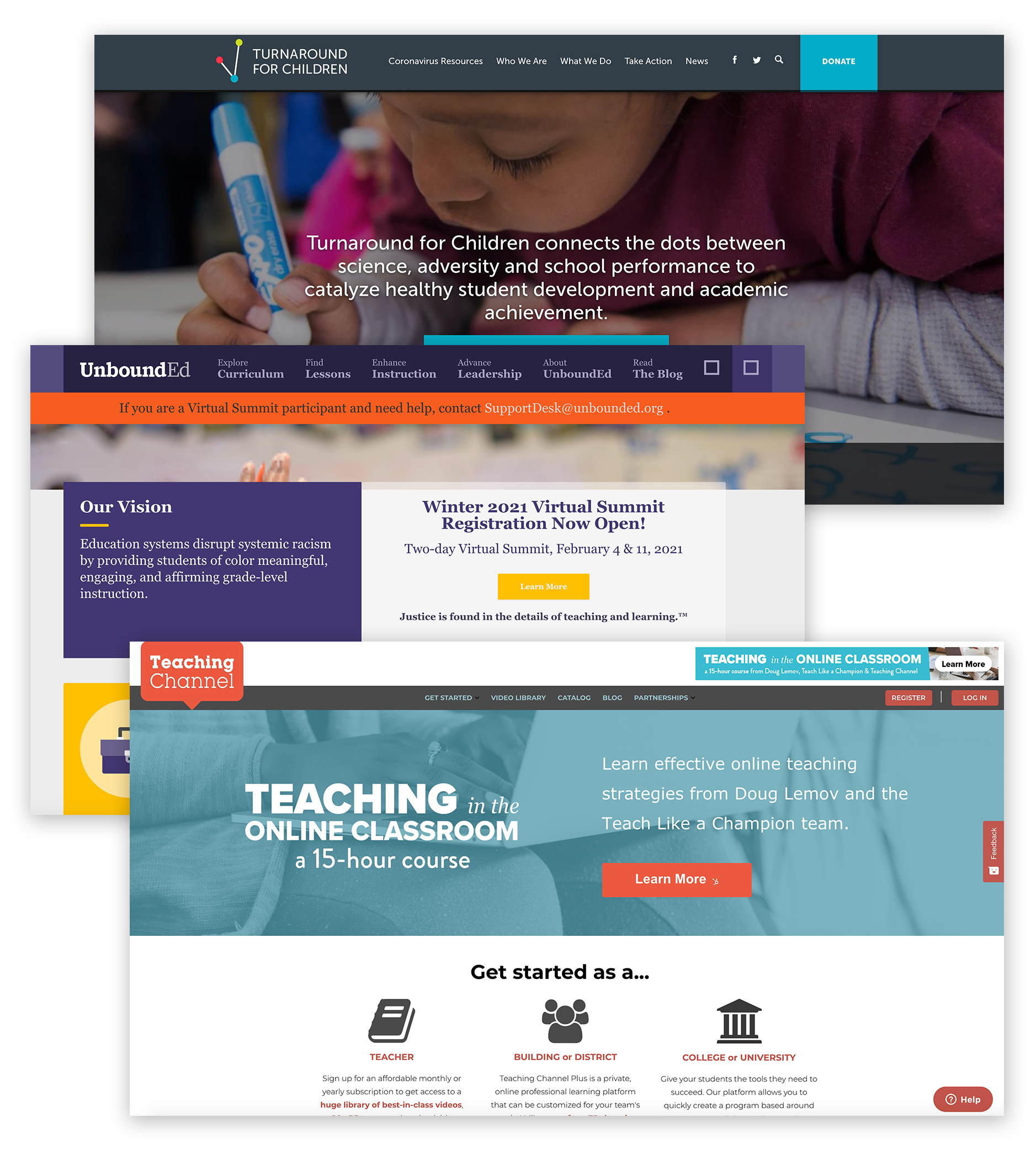
3. Complete a competitive audit
Where does this product fit into your edTech niche? Who’s already built an experience like yours?
The competitive audit will also help you map the UX language of your market through the lens of user expectations.
What kinds of words and experiences do users already expect from products like yours?
4. Administer quantitative user surveys
Establish a baseline for user data in order to develop more targeted qualitative questions.
For example, how does demographic data, like years spent teaching or level of education, cross-reference with teacher technology usage?
Interesting patterns will help you identify areas worthy of deeper investigation in the next phases of user research and testing.
5. Observe students and teachers in a real-time environment
It’s crucial to have a UXR lens in place before you head out into the field.
Purposeful in-person investigations in the classroom lead to better insights about your personas and your product.
With your user research findings in hand, you’ll be able to prioritize design decisions that work for your primary persona.
You’ll also be better positioned to help administrators and other buyers understand the value of your design.
How UXR Helps You Demonstrate the Value of edTech Software
Unlike commercial applications, edTech software is not always used by the same people who make purchasing decisions.
This makes designing and selling an edTech product a special kind of challenge.
Products often have multiple users with very different personas, including learning tools meant for both teachers and students.
But what happens if you put most of your resources into the student experience, leaving little time or money to create a delightful teacher experience, too?
When you’ve conducted strong user experience research, you can avoid these kinds of budgetary and time constraints.
You’ll be able to give equal resources to each persona who interacts with your product and clearly communicate the value of your learning tool.
Value matters for every persona, whether you’re designing for students, teachers, or administrators.
Students need exciting ebooks and easier ways to access major texts.
Teachers need to know their time isn’t being wasted and that they’ll look professional in front of supervisors and parents.
Administrators need to know your products are effective and easy to use.
Ultimately, user research findings ensure that your product’s experience is created in concert with your product’s value proposition.
This way, all of your UX, visual design, and technology choices will make your product more relevant and even more delightful.
With the right UXR strategy, you can continue designing edTech that maximizes your impact—no matter how your user needs continue to evolve.
Are you looking for more tactical ways to apply your user research findings?
Contact Backpack Interactive below to find out how we can help futureproof your next edTech product.

Sean Oakes
Sean has over 20 years of interactive design and account management experience. In 2000, Sean founded SOS, a specialized creative studio based in Brooklyn, NY. He has set the creative vision for the highly regarded firm; the power of thoughtful design and delightful user experience to enable better teaching, learning, and communication.
Sean is a graduate of the Rhode Island School of Design. His work has been recognized by The Webby Awards, Communication Arts, SXSW Interactive, Business Week, The Smithsonian, and Apple.